The discussion about flyers and e-mail
in the Bulletin prompted me to run a survey on the subject. The
questionnaire was on line from February until June. So there were
four months during which people could participate. 232 people took
advantage of this opportunity. 200 valid questionnaires were filled
out. I say valid, as many forms contained no information, thus rendering
them invalid. From this I determined - these are just general observations
- that the use of the Internet is very heterogeneous, and contains
a great bandwidth of knowledge.
199 of the participants answered in German, only one response
was in English. 72% of the responses were private. Clubs were noticeably
under-represented. This corresponded with my personal experience.
Unfortunately I have met few contact people who routinely use the
internet and e-mail. This would be a great opportunity to advertise
club events or directions, if only this new medium was utilised
effectively. Perhaps clubs should really think about it.
Flyers - paper or electronic?
But, to get back to the point, which king of flyers do people
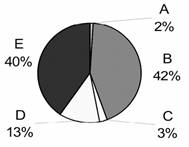
prefer? 45% (42 + 3) of the participants want paper flyers and the
Bulletin, 53% (40 + 13) would like to see flyers on the internet.
Of these, 80% also want notification through e-mail. Amazingly,
2% of the respondents had no opinion on flyers - the whole point
of the questionnaire (graph 1).
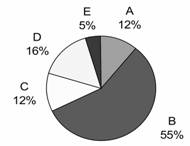
If flyers are published on the internet, along with e-mail notification,
67% (55 + 12) of the participants believe there should be a link
to the flyer or homepage in the e-mail. More than 70% (55 + 16)
want to be informed with text only. Only about 20% (12 + 5) like
the idea of HTML mail. 21% (16 + 5) would like
the flyer as
an attachment to the mail (graph 2). |
Die Diskussionen über Flyer und
E-Mail im Bulletin hatte ich zum Anlass genommen, eine Umfrage über
dieses Thema durchzuführen. Der Fragebogen war von Februar
bis Juni online. Somit waren 4 Monate Zeit, sich an der Umfrage
zu beteiligen. Diese Gelegenheit nutzten auch 232 Teilnehmer. Dabei
wurden genau 200 gültige Fragebogen ausgefüllt. Gültig
deshalb, weil manche Antwortbögen keine Angaben enthielten
und somit ungültig sind. Dabei zeigt sich - dies als generelle
Anmerkung -, dass die Nutzung des Internets noch sehr heterogen
ist und eine große Bandbreite von Wissen vorhanden ist.
Geantwortet haben 199 Teilnehmer auf deutsch, nur eine Antwort
war englisch. 72% der Antworten waren privat. Die Klubs sind somit
deutlich unterrepräsentiert. Dies deckt sich auch mit meiner
persönlichen Erfahrung. Kontaktpersonen, die mit Internet und
E-Mail routiniert umgehen, habe ich leider wenige angetroffen. Hier
wäre manche Terminabstimmung oder Wegbeschreibung leichter
gelaufen, wenn die neuen Medien wirksamer eingesetzt würden.
Vielleicht sollten die Klubs darüber einmal nachdenken.
Flyer - auf Papier oder elektronisch?
Aber, um gleich in das Thema einzusteigen, welche Flyer werden
nun gewünscht? Papierflyer und Bulletin wünschen sich
45% (42 + 3) der Teilnehmer, 53% (40 + 13) möchten Flyer im
Internet. Davon 80% mit Mailbenachrichtigung. Erstaunlich, dass
2% der Teilnehmer keine Meinung zu Flyern hatten - war das doch
Thema der Umfrage. (Grafik 1).
Bei der Veröffentlichung von Flyern im Internet und einer
Mailbenachrichtigung sind 67% (55 + 12) der Teilnehmer der Meinung,
ein Link auf den Flyer oder die Homepage reicht aus. Über 70%
(55 + 16) wollen per Textmail informiert werden. Nur rund 20% (12
+ 5) finden HTML-Mails gut. 21% (16 + 5) möchten den Flyer
im Anhang der Mail haben (Grafik 2). |
Some Original Comments
Almost everyone who filled out the form took the opportunity
to add their own comments. A few really tacky comments marred the
overall picture: I don't intend to address the more eccentric ideas.
However it was really nice that many of you were very generous with
your compliments - and for this I thank you all. What follow are
some of the comments I received, albeit abbreviated, in their original
form:
- We don't need any flyers, either via the post or e-mail.
The Bulletin is sufficient.
- We have discussed the subject in our club, and I am actually
asked to use e-mail as much as possible.
- I think flyers via e-mail are great. Above all, it saves
money!
- It would be practical if everybody would indicate for what
region, or for what level, they would like to receive flyer
information.
- As I travel using a navigation system, it would be great
if the exact postal address were available for each dance event.
- In principal it would be sufficient if clubs had the flyer
available for download from their homepages. Unfortunately that's
not often the case.
- … I still find paper flyers more attractive, partly because
people spend a long time looking for the dance place. It should
appear very clearly on the invitation - right on the front.!
- Flyers on dark paper (red, blue, green, brown), with black
printing, are not readily copied on a normal scanner. Sometimes
flyers are too decorative, they have coloured areas that are
too big or a dark-coloured background, too many decorative elements
and too little written information, especially travel directions
(e.g. extracts from city and road maps). They are often hard
if not impossible to copy legibly. In order to transmit information
we don't need master graphic artists. My choice of flyer is
in DIN A4 format, portrait or landscape, perhaps printed on
both sides, with at least a 2 cm. border on all sides, with
a dark, clear font (e.g. something like Arial 12 - 14 Pt), on
a light background - and the following information should be
clearly stated: Where and when is the event taking place,
and who is hosting it? It's also important to have the postal
code as well as the name of the place. And the flyer should
be easily copied to the internet or by a scanner, without the
additional installation of a help programme and without colour.
- I think that the only useful way to advertise on the internet
is via email without attachments.. If in addition there is a
central mailing list, where those who are interested can add
their address, so that no-one is bombarded with unwanted emails,
then I think that would be optimal.
- The safest way is a mix of classical flyers and the Internet.
- I would really welcome notification via email - but please
don't let it degenerate into a stream of spam!!
- I really think it's an impertinence for a club to send a
flyer via email, and then wait for the webmaster, at his own
expense, to print it, duplicate and distribute it in his club.
Recently this infuriating habit has become so invasive that
I no longer take these flyers to my club. If a club wants to
advertise their special, then they should do so at their own
expense.
- Many flyers take too long to download.
- With the Internet becoming more and more in use these days,
a service like this would cut down on wasted paper. Also making
advertisement cheaper and available to a larger audience.
- It annoys me when I only receive one or two flyers. This
forces me to go out and find a copier. Please continue to send
flyers through the post, but at least half a dozen.
- I think it's great that you are conducting this survey!
If a central mailing list were created and maintained, then
we would all save time and money.
Results of the survey
These excerpts are just a compilation of opinions from many answers.
I also received many technical suggestions, but I haven't included
these. You can find the detailed results on the Lovely Caotics homepage
at:
http://www.lovelycaotics.de/sd-umfrage
From this feedback I drew the following
conclusions:
- In general we have the problem that many flyers neither
contain good information nor look very good.
- I doesn't make any difference whether I receive only two
flyers through the post, or print out one emailed flyer, I still
have to make copies. The receiver must absorb the costs. Whether
it's worth the expense is something everyone must decide for
themselves.
- Huge volumes of data and countless emails should be avoided.
A mailing list available on line would be useful.
- Paper flyers and similar on the internet complement themselves.
A good mix of the two mediums is useful. An example would be
paper flyers in the immediate area, and electronic means further
afield. For main events, such as Jamborees, paper should be
used extensively.
- Online information can be kept very current. This helps
if there's a change in location or caller, or an alteration
of the programme. Each club could best take care of this on
their own homepage.
- In comparison to the use of paper, a mailing list can help
to keep expenses down. This way expenses can also be shared
by both the sender and the receiver.
Solution: Newsletter
As a result of the questionnaire I propose a solution. This way
we can test how the use of online advertising actually varies. I
would like to begin with a very simple solution. We can readily
extend this in the future. This way we only need a critical number
of participants, so that the activity doesn't fizzle out:
The proposal is as follows:
- We organize a newsletter, which everybody can subscribe
to. So only the people who want to receive this information
receive the email.
- Every club can send their event information to the newsmaster.
- All information will be placed in the newsletter.
- The newsletter will appear once a month. This way we will
avoid a huge flood of mail that a mailing list would produce.
- The newsletter is in text format, and would contain links
to event flyers on web pages. This reduces the volume of data.
- We will watch to see what happens. Suggestions are always
welcome.
As I have set the ball rolling, I am ready to set up the newsletter
and get the experiment ready to go. An invitation to subscribe to
this letter will be in the Bulletin and also reach you via email.
Please send questions and suggestions to me at:
michael@weber.cd
Translation: Gina Draker |
Kommentare im Originalton
Von der Möglichkeit Kommentare abzugeben wurde von fast
jedem Teilnehmer Gebrauch gemacht. Einige wenige wirklich unverschämte
Bemerkungen trübten das Gesamtbild; wobei ich nicht die Darstellung
ausgefallener Meinungen ansprechen möchte. Schön jedoch
war, dass viele nicht mit Lob für diese Umfrage sparten - dafür
möchte ich mich herzlich bedanken. Im nachfolgenden stelle
ich einige Schlaglichter im Originalformat, teilweise gekürzt,
zusammen:
- Wir brauchen keine Flyer, weder Post oder Email! Bulletin
langt schon.
- Wir haben das Thema im Club diskutiert, und ich bin sogar
aufgefordert worden, so viel wie möglich per Mail zu machen.
- Ich fände die Flyer per Email super. Vor allem weil
so Kosten gespart werden können!
- Es wäre praktisch, wenn man angeben könnte, für
welche Region oder welches Level man die Flyerinformationen
bekommen möchte.
- Da ich nach Navigationssystem fahre, fände ich es toll,
wenn alle Veranstaltungen mit der exakten Postanschrift versehen
wären.
- Im Prinzip würde es ja genügen, wenn die Clubs
auf ihrer Homepage den Flyer zum Downloaden hätten. Dem
ist aber leider oft nicht so.
- ...mir ist bei den Papierflyern immer wieder aufgefallen,
dass man z.T. erst lange nach dem Veranstaltungs-Ort suchen
muss! Er sollte viel deutlicher auf der Einladung - gleich vorne
drauf - erscheinen!
- Flyer auf dunkelfarbigem Papier (rot, blau, grün, braun)
mit schwarzem Druck sind mit einem normalen Scanner nicht kopierfähig.
Vielfach sind Flyer zu bunt, haben zu große Farbflächen
oder dunkelfarbigen Hintergrund, zu viele Dekorations-Elemente
und zu kleine Schrift, insbesondere in den Wegeskizzen (z.B.
Ausschnitte aus Stadtplänen und Landkarten). Sie sind deshalb
schlecht bis überhaupt nicht lesbar zu kopieren. Wir brauchen
zur Informationsübermittlung keine grafischen Meisterwerke.
Mein Wunsch-Flyer hat DIN A4-Format hoch oder quer, evtl. auch
zweiseitig bedruckt, mit mindestens 2 cm Rand an allen Seiten,
mit dunkler, klarer Schrift (z.B. ähnlich wie Arial 12
- 14 Pt) auf hellem Hintergrund - und informiert sofort deutlich
erkennbar: Welches Ereignis findet wann und wo statt und wer
veranstaltet es? Bei Ortsnamen ist auch die PLZ wichtig. Und
der Flyer soll problemlos aus dem Internet oder mit dem Scanner
kopierbar sein, ohne zusätzliche Installation eines Hilfsprogramms
und ohne Farbdruck.
- Der Versand von Mails ohne Anhang ist, denke ich, die einzige
Möglichkeit, sinnvoll per Internet zu werben. Wenn es dazu
noch eine zentrale Mail-Liste gibt, auf der Interessierte ihre
Mail-Adressen hinterlassen können, so dass niemand unerwünscht
mit Mails belästigt wird, dann wird die Sache optimal.
- Sicherlich macht es aber die Mischung aus klassischen Flyern
und Internet.
- Ich würde die Benachrichtigung per Mail sehr begrüßen
- aber bitte lasst es nicht in eine Flut von "Spam"
ausarten!!
- Ich finde es eine ziemliche Unverschämtheit einem Klub
einen Flyer per Email zu schicken und dann zu erwarten, dass
der Webmaster diesen Flyer auf seine Kosten ausdruckt, vervielfältigt
und im Verein auslegt. Diese Unsitte hat in letzter Zeit so
stark zugenommen, dass ich diese Flyer nicht mehr im Verein
auslege. Wenn ein Verein Werbung für ein Special macht,
soll er auch die Kosten für die Werbung übernehmen.
- Viele Flyer dauern zu lange beim Herunterladen.
- With the Internet becoming more and more in use these days,
a service like this would cut down on wasted paper. Also making
advertisement cheaper and available to a larger audience.
- Ich ärgere mich eher wenn ich nur einen oder zwei Flyer
erhalte. Dies zwingt mich, zuerst einen Kopierer zu benützen.
Bitte Flyer trotzdem per Post senden aber mindestens ein halbes
Dutzend.
- Super, dass Ihr eine solche Umfrage macht!! Wenn dann eine
zentrale Mail-Liste erstellt ist und gepflegt wird, sparen wir
alle viel Zeit und Geld.
Erkenntnisse aus der Umfrage
Diese Auszüge sind die zusammengefassten Meinungen vieler
Antworten. Viele technische Ausführungen waren auch dabei,
die ich aber nicht dargestellt habe. Die detaillierten Zahlen sind
auf der Homepage der Lovely Caotics unter
http://www.lovelycaotics.de/sd-umfrage
dargestellt. Aus diesen Rückmeldungen gibt es für mich
einige Erkenntnisse:
- Generell haben wir das Problem, dass viele Flyer inhaltlich
und optisch nicht gut sind. Das hat mit dem Medium, über
das die Informationen verteilt wird, nichts zu tun. Da gibt
es Optimierungsbedarf.
- Es macht keinen Unterschied, ob ich nur zwei Flyer per Post
erhalte oder einen gemailten Flyer ausdrucke und dann mehrfach
kopieren muss. Die Kosten sind beim Empfänger. Ob die Höhe
erträglich ist, muss jeder für sich selbst entscheiden.
- Große Dateivolumina und unzählige Mails sollten
vermieden werden. Eine gewisse Kanalisierung der Online-Aktivitäten
macht Sinn.
- Papierflyer und solche im Internet ergänzen sich. Eine
gute Mischung der zwei Medien ist sinnvoll. Beispielsweise Papier
im näheren Umfeld und elektronisch weiter gestreut. Bei
Großveranstaltungen mit großer Bedeutung, wie Jamborees,
sollte Papier auch umfassend verteilt werden.
- Online-Informationen können auch zeitnah aktuell gehalten
werden. Dies bei Verlegung des Tanzplatzes, Änderung des
Callers oder Verschiebung des Programms. Das hat jeder Klub
dezentral auf seiner Homepage am Besten im Griff.
- Eine Mail-Liste reduziert im Vergleich zum Papiermedium
die Kosten erheblich. Dabei findet aber auch eine Umverteilung
der Kosten vom Absender auf den Empfänger statt.
Lösung: Newsletter
Als Fazit der Umfrage unterbreite ich einen Lösungsvorschlag.
Damit könnten wir ausprobieren, wie sich der Umgang mit der
Online-Werbung tatsächlich gestaltet. Als Freund pragmatischer
Lösungen möchte ich ganz einfach anfangen. Erweiterungen
können wir zukünftig gerne machen. Dazu benötigen
wir aber auch ein kritische Masse an Teilnehmern, damit sich die
Aktivität nicht totläuft.
Die Lösung sieht folgendermaßen aus:
- Wir richten einen Newsletter ein, der von jedem abonniert
werden kann. So erhalten nur Leute, die diese Information wollen,
auch das Mail.
- Jeder Klub kann Veranstaltungshinweise an den Newsmaster
schicken.
- Jeder Veranstaltungshinweis wird in den Newsletter aufgenommen.
- Der Newsletter erscheint einmal im Monat. Damit vermeiden
wir ein großes Mailaufkommen wie es eine Maillist produzieren
würde.
- Der Newsletter ist im Textformat und enthält Links
auf Flyer oder Homepage der Veranstaltung. Das reduziert das
Datenvolumen.
- Wir beobachten, was passiert. Anregungen sind immer willkommen.
Da ich diesen Stein losgetreten habe, erkläre ich mich auch
bereit, einen Newsletter einzurichten und das Experiment zu begleiten.
Eine Einladung, diesen Newsletter zu
abonnieren gibt es im
Bulletin und per Mail.
Fragen und Diskussion per Mail bitte gerne an:
michael@weber.cd |
 Bulletin Sep 2004